
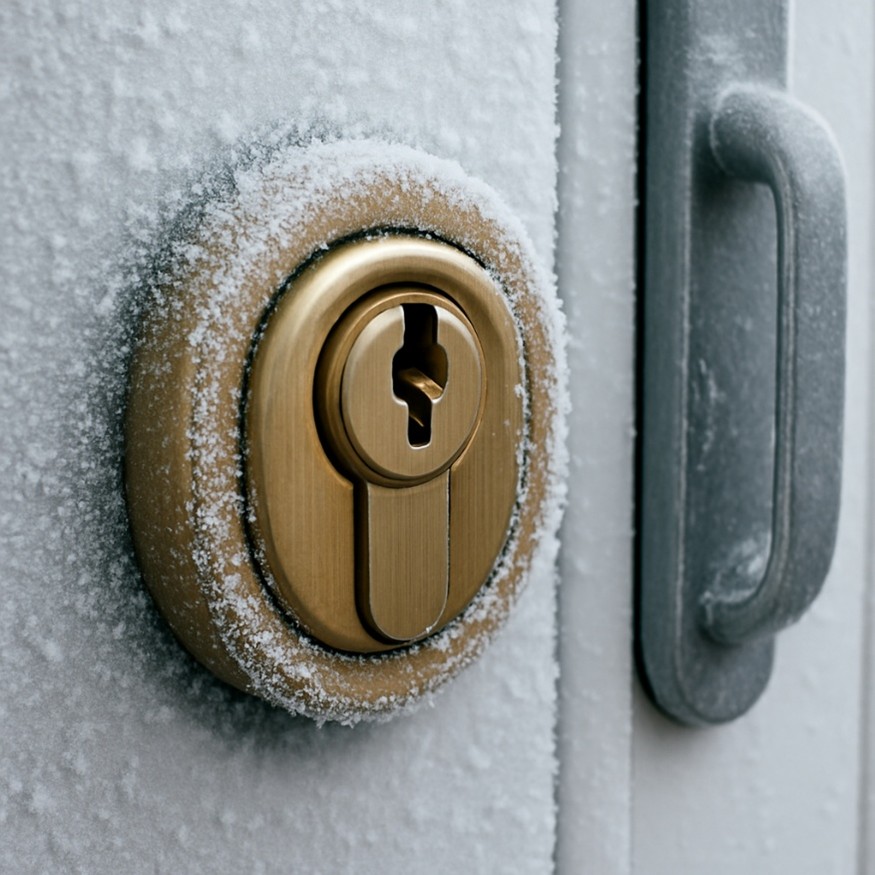
Winter is the time of year when locks start to behave differently. As temperatures drop and moisture becomes more common, homeowners across Coventry and Warwickshire often find that their door locks suddenly feel stiff, slow or completely jammed. These problems are inconvenient at best and can lead to costly emergencies if left untreated.
Cold weather affects all types of locks, including traditional mortice locks and modern multi point mechanisms on uPVC or composite doors. Understanding why it happens and what you can do about it makes a big difference in keeping your home safe and easy to access throughout the season.
This guide explains how cold temperatures affect door locks, the most common winter issues and the simple steps you can take to avoid being caught out.
Why Locks Freeze or Jam in Cold Weather
Metal naturally contracts in low temperatures. As the temperature drops, the internal components of your lock become tighter, making it harder for the key to turn smoothly. Moisture can also enter the lock and freeze, causing blockages and resistance.
Here are the main causes of winter lock problems.
Cold metal contraction
Metal contracting even slightly can cause the lock cylinder to become misaligned with the mechanism. This makes the key stick, grind or fail to rotate fully.
Moisture entering the lock
Rain, frost or condensation often seep into the lock, especially when the door is exposed to wind or has worn weather seals. When moisture freezes inside the mechanism it can completely block the key.
Stiff multi point mechanisms
On uPVC and composite doors, the long multi point strip that runs along the edge of the door can swell or shrink depending on temperature. This results in difficulty lifting the handle or engaging the locking points.
Worn locks
Older or poorly maintained locks are more vulnerable to winter issues. Worn pins, dry mechanisms and loose components are more likely to stick when the temperature drops.
Signs Your Locks Are Being Affected
If you notice any of the following, your lock may already be struggling with winter conditions.
- Resistance or grinding when turning the key
- Difficulty lifting the handle on a uPVC door
- A key that feels loose or wobbly in the lock
- A lock that feels stiff first thing in the morning
- The key becoming stuck or refusing to turn
These symptoms rarely go away on their own and will usually get worse as the weather gets colder.
How to Prevent Frozen or Jammed Locks
Fortunately, there are several ways to protect your locks from cold weather and reduce your chances of a winter lockout.
Keep the lock dry
One of the simplest solutions is to prevent moisture from entering the lock. Make sure door canopies, seals and weather strips are in good condition. If the door is fully exposed, consider fitting a simple lock cover to reduce rain and frost entering the key hole.
Lubricate the lock
Use a graphite based lock lubricant rather than oil. Oil based sprays can thicken in cold temperatures and attract dirt, which causes more problems in the long term. A small amount of graphite will keep the pins moving smoothly during winter.
Avoid forcing the key
If the key refuses to turn, do not push or twist it forcefully. This often leads to snapped keys and emergency callouts. Instead, gently warm the key in your hands and reinsert it. If the lock is frozen, warming the key can melt a small amount of ice inside the cylinder.
Check the door alignment
Cold weather can cause uPVC and composite doors to shift slightly. If the door drops just a few millimetres the lock and latch will no longer line up correctly. Signs of alignment problems include the need to lift the door as you close it, or having to push hard before the key engages. A locksmith can realign the door in a few minutes using specialist tools.
Service older locks
If your locks are several years old, they may be more susceptible to jamming. A professional service can clean internal components, tighten loose parts and improve performance during winter.
Replace damaged or insecure locks
If a lock is already worn, corroded or difficult to use, winter will only make the issue worse. Upgrading to a new, secure lock will save you time, stress and potential emergency callout fees.
What to Do If Your Lock Freezes
If you are already dealing with a frozen lock, here are steps you can take safely.
Warm the key
Hold the key in your hands to warm the metal or place it in your pocket for a few minutes. Do not use a naked flame.
Use approved lock de icer
A specialist lock de icing spray can melt ice quickly without damaging the cylinder. Avoid pouring hot water on the lock as it freezes again quickly and can damage the mechanism.
Do not force the handle
For uPVC doors, forcing the handle can break the internal gearbox, which is one of the most common winter repair callouts. If the handle does not lift smoothly, stop immediately and call a locksmith.
When to Call a Locksmith
If you repeatedly struggle with a stiff or frozen lock, it is time to get it looked at. A professional locksmith can diagnose the issue, whether it is door alignment, internal freezing, worn parts or a failing cylinder.
RJ Parker Locksmiths has been supporting homeowners across Coventry and Warwickshire since 1979 and provides fast, reliable help when locks become difficult during winter. A quick assessment often prevents more expensive repairs later in the season.
Winter does not have to mean lock problems. With simple maintenance and timely checks you can keep your home secure and avoid unexpected issues during the coldest months of the year.