
If you’re a homeowner, landlord, or tenant in the UK, you’ve likely heard of “British Standard” locks — and particularly BS3621. But what exactly does that mean? And why does it matter?
At RJ Parker Locksmiths, we regularly help customers who are either upgrading their home security or making sure their locks comply with insurance requirements. In this blog, we’ll explain what BS3621 is, why it’s important, and how to tell if your locks are compliant.
What Is BS3621?
BS3621 is a British Standard set by the British Standards Institution (BSI) that applies to mortice and rim locks. It sets out specific criteria a lock must meet to be considered secure enough for use on external doors.
In simple terms, BS3621 locks are:
- Manually operated from both inside and out (no internal thumb turns)
- Key operated for both locking and unlocking
- Designed to resist drilling, picking, and forced entry
- Fitted with at least five levers or a cylinder that offers comparable protection
- Built to withstand common burglary techniques such as lock snapping, bumping, or drilling
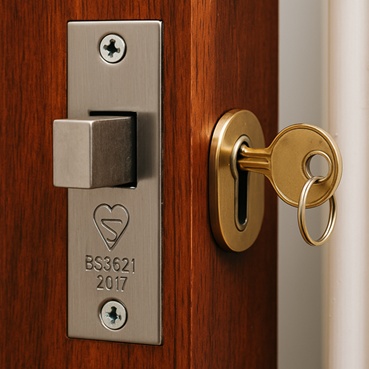
A lock that meets the BS3621 standard will have the British Standard Kitemark (⟨kitemark image⟩) stamped on the faceplate — usually with the standard number and year (e.g. BS3621:2017).
Why Does BS3621 Matter?
- Having BS3621 locks isn’t just about peace of mind — it’s often a requirement for your home insurance.
- Many UK insurance providers specify BS3621 compliance for all final exit doors (typically your front and back doors) in order for your policy to remain valid.
- If your lock isn’t compliant and you’re burgled, there’s a chance your insurer may refuse to pay out — even if you’ve locked up properly.
Here’s why BS3621 locks matter:
- Enhanced protection against common break-in methods
- Complies with home insurance terms (reducing risk of rejected claims)
- Approved by the police under the Secured by Design initiative
- Recognised as a benchmark of security by locksmiths and security professionals across the UK
What Types of Locks Fall Under BS3621?
There are three key types of locks that are commonly tested under BS3621:
- 5-Lever Mortice Deadlocks
- Fitted into the door itself, operated by a key
- One of the most common BS3621-compliant locks for wooden doors
- 5-Lever Mortice Sash Locks
- Similar to a deadlock but includes a latch and handles
- Offers both convenience and security
- Rim Cylinder Locks (e.g. Yale Night Latch)
- Mounted on the surface of the door
- BS3621 versions include a key locking mechanism from both sides
Note: For UPVC or composite doors, you may be looking at BS8621 or BS10621 standards instead, which deal with multi-point locking systems. However, BS3621 remains the key standard for timber doors and many external residential doors across the UK.
How Do I Know If I Have a BS3621 Lock?
Look for the British Standard Kitemark on the lock faceplate. This is usually stamped into the metal on the edge of the door where the lock is fitted. It will typically look something like:
BS3621:2007
If your lock doesn’t have this marking, it likely does not comply with BS3621 — even if it seems strong or has multiple levers.
Not sure? RJ Parker Locksmiths can carry out a free security audit to assess whether your current locks meet British Standards.
Can I Upgrade to BS3621 Easily?
In most cases, yes. If you currently have an old or non-compliant lock, we can supply and install a BS3621-rated alternative that fits your existing door — often without major adjustments.
Upgrading is typically:
- Quick (often completed in under an hour)
- Affordable
- Insurance-compliant
- What If I’m a Landlord?
If you’re renting out a property, it’s particularly important to ensure all final exit doors have locks that meet BS3621.
Why?
- Insurance compliance: Landlord or buildings insurance often requires BS3621 locks
- Tenant safety: You’re responsible for providing a safe and secure property
- Legal obligation: Under the Housing Health and Safety Rating System (HHSRS), inadequate door security may be seen as a hazard
RJ Parker Locksmiths offers landlord packages for multiple property lock audits and upgrades — get in touch to discuss options.
What If My Door Is UPVC or Composite?
UPVC and composite doors often use multi-point locking systems, which operate differently from traditional mortice or rim locks. These systems usually fall under PAS 24 or other British Standards (like BS8621 or BS10621).
However, if your door has a Euro Cylinder, it’s important to make sure it’s:
- Anti-snap
- Anti-bump
- Anti-pick
We recommend upgrading to a TS007 3-star cylinder or 1-star cylinder with a 2-star handle for maximum protection.
RJ Parker Locksmiths can assess your existing system and advise whether an upgrade is necessary.
Final Thoughts
BS3621 might sound like just another number, but it represents one of the most important standards in UK home security. Whether you’re a homeowner, tenant, or landlord, ensuring your external door locks meet this standard is essential — for both safety and insurance compliance.
At RJ Parker Locksmiths, we offer:
- Free lock assessments
- Same-day upgrades to BS3621 locks
- Mobile callouts across Coventry and surrounding areas
- Worried Your Locks Aren’t BS3621 Compliant?
Get in touch with RJ Parker Locksmiths today for a free quote or security check. Protect your home, meet insurance requirements, and enjoy peace of mind.