
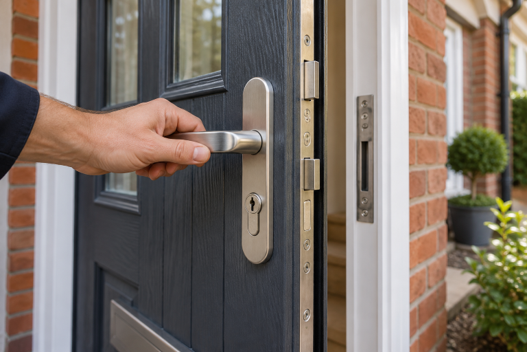
Composite doors are popular with homeowners because they are strong, practical and designed for everyday use. But even a well-made door can develop a locking problem over time. Perhaps the handle has become difficult to lift, the key will not turn properly or the door only locks if you pull it firmly towards you.
When this happens, the cause is not always the lock itself. A small change in the position of the door can affect how its locking points line up with the frame. Identifying the symptoms early can help prevent a frustrating problem from turning into a complete lock failure.
Here are six common reasons composite doors become difficult to lock, and the options available to put things right.
1. The door has dropped or moved out of alignment
Composite doors can gradually move out of alignment through normal use, changes in temperature or movement in their hinges. Even a slight shift may prevent the hooks, bolts or rollers on a multipoint lock from engaging smoothly.
You might notice that the handle lifts easily when the door is open but feels stiff when the door is shut. This often suggests that the locking points and their keeps are not lining up correctly. A locksmith can inspect the alignment and determine whether an adjustment is needed.
2. The hinges need adjusting
Hinges support the weight of the door and help it sit squarely inside the frame. If they loosen or move, the door may catch on the threshold or frame and put extra strain on the lock.
Avoid making large hinge adjustments without knowing the correct procedure for your particular door. Incorrect adjustments can make the alignment worse or affect weather seals.
3. The multipoint locking mechanism is worn
Many composite doors have a multipoint locking system that secures the door at several positions. With repeated use, components such as hooks, rollers, gearboxes or connecting strips can become worn or fail.
A handle that suddenly feels loose, will not lift fully or no longer operates the locking points may indicate an internal fault. Depending on the system and availability of compatible parts, the mechanism may be repairable without replacing the door. RJ Parker Locksmiths provides lock repair and replacement services for composite and uPVC doors, including mechanisms, gearboxes, handles and hinges.
4. The euro cylinder is damaged or failing
If the handle operates normally but the key sticks, spins unusually or refuses to turn, the euro cylinder could be at fault. Wear, a damaged key or an internal cylinder problem can all create similar symptoms.
A locksmith can check whether the cylinder is responsible and advise on a suitable replacement. It can also be an opportunity to consider a higher-security cylinder where appropriate.
5. The keeps or strike plates are incorrectly positioned
The metal keeps fitted to the frame receive the door’s locking points. If they shift, become damaged or have been fitted incorrectly, the mechanism may meet resistance when the handle is lifted.
This can sometimes feel like a major lock failure even when the mechanism itself is sound. A professional assessment can help distinguish a positioning issue from a defective lock.
6. Dirt, damaged seals or general wear are causing resistance
Debris around the threshold, damaged weather seals or accumulated wear can prevent the door closing fully. If the door is not seated correctly in the frame, the locking points may struggle to engage.
Check for visible dirt or an obstruction, but avoid dismantling the locking system or applying unsuitable lubricants. Different mechanisms require different maintenance products.
What can you safely check yourself?
With the door open and under your control, look for obvious obstructions around the frame and threshold. Check whether the key is bent or visibly damaged, and note whether the handle behaves differently with the door open and closed.
Do not force the handle or key. Excessive pressure can damage the gearbox or snap a key, potentially leaving the door insecure or unable to open. If the door is stuck shut, arrange professional assistance rather than trying to prise it open.
Can a composite door lock be repaired without replacing the door?
Often, yes. The right solution depends on the fault. A door may simply need adjusting; another may require a replacement cylinder, gearbox or complete multipoint locking strip. A competent locksmith can assess the components and explain the options before work begins.
Replacing the entire composite door is not usually the first response to a locking fault. Diagnosing the mechanism and alignment first is the more sensible starting point.
Composite door lock repairs in Coventry
RJ Parker Locksmiths has worked with modern door locking systems for many years, including composite and uPVC door mechanisms. If your composite door is difficult to lock, the handle is stiff or the key will not turn, contact the team to discuss an inspection and suitable repair.
For assistance in Coventry and the surrounding area, call 02476 594171 or find out more about RJ Parker Locksmiths in Coventry.